Sunday, November 6, 2011

That Sounds Like... issue 1

Is it possible that some melodies are so infectious--so right on the zeitgeist--that they aren't written, but rather, captured?
Today in "That Sounds Like," the "TSL" team submits that Bowie's Rebel Rebel Sounds Like Pharoah Sanders's The Gathering . These songs were written an ocean apart, and in different musical solar systems in the early 1970s. In spite of their relative popularity, it strikes me as much more likely that Bowie would be listening to Sanders than vice versa. Bowie notoriously casts a wide net of listening and he plays the saxophone; even so, I don't think I've ever heard about Bowie rolling into all the downtown free jazz clubs.

Synchronicity? Plagiarism? Coincidence?
You be the judge:


Don't be too distracted by the eyepatch. Note the earring as well. This was released in 1974, but was potentially written back in 1973. For a number of reasons it's unlikely that Bowie had ever heard Sanders's The Gathering.


This was released in 1973 on Impulse! Records. If Bowie had written Rebel Rebel in 1973, but didn't release it until 1974, it seems unlikely that this free jazz piece borrows anything from the Thin White Duke. But right around that 10 minute mark...

So we leave it to you loyal listener. One melody that rose up in different places in the early '70s, just like calculus in the 17th Century.

Tuesday, May 31, 2011

Melodica Watch May 2011

Annoying, unfairly discounted (man, instrument, respectively)
During my brief period of melodica-ownership, I noticed most people reacted to it as kind of a joke. Fair enough, I suppose; it’s got these silly little keys, and sounds kind of honky and funny. And given the way I played the melodica, it kind of was a joke.
    But the melodica in the right hands is a wonderful, dynamic little instrument. Sure you can’t tune it, but to banish it to “quirky for the sake of quirky” along with instruments like the moonshine jug or the timpani is only doing yourself a great disservice. I’m going to stop short of saying that a mutual love of the melodica brought reggae musicans and post-punk musicians together, resulting in the white-hot dubstep of today-- but that’s probably true if you’re willing to overlook things like chronology.

Four songs I’ve been listening to lately that prominently feature the melodica: 

1.    New Order—Love Vigilantes. from Low-Life
2.    Bob Marley- Sun Is Shining. from African Herbsman.
3.    Television Personalities—A Day in Heaven. from Mummy You’re Not Watching Me
4.    Gang of Four- 5.45. from Entertainment!

NOTE: GANG OF FOUR WAS CAUGHT BY SOUNDCLOUD AS COPYRIGHTED MATERIAL. AS SUCH IT DOES NOT APPEAR ON THIS MIX. MY BAD. SORRY, GANG OF FOUR
Melodica Watch 5/31 by benj

Tuesday, May 3, 2011

Love at 33 1/3 RPM: A 25 year old’s love letter to an archaic medium

At the risk of confirming everyone’s suspicions that millennial are all waxing nostalgic for a time we didn’t know—we’re getting used to baby boomers projecting all of their self-loathing on us—I’d like to explain why we millennials pretty much only pay for music when it comes on vinyl—a format that arguably was surpassed before we were born.
For those who don’t know, the LP is still marching along, the musical format that refuses to die. In 2010, vinyl sales were up 26 percent. Contrast that to CDs, which fell 21 percent, and the music industry saving-digital download sales that crept up just 2.1 percent. Records are becoming so mainstream that the counter-culture has revived cassettes.
Some of this can probably be attributed to retro-pastiche. Vintage turntables and dusty LPs, like books on a shelf, have looked natural and attractive in the American home since the ‘40s.

But surely there’s more to it than that. People are fanatics about their records. There’s an entire “Record Store Day,” that—in Chicago anyway—saw droves of young dudes (of every age and gender) flipping through crates. Stores with names like “The Dusty Groove” were packed. People were squeezing through aisles, even as outside the freezing rain made a compelling case for downloading. Why?
There’s an obvious and less-obvious appeal. Let’s start with the obvious: Records just sound better than mp3s.
For all the popping and crackling, records can be cleaned. The mp3’s damage is inherent in the design. I’ll admit there’s a really complex way of explaining how an mp3 is made, and then there’s this one. It’s reductive and without nuance, but as you’ll see, this is how mp3s are made. It’s appropriate to the format.
The mp3 caught on because unlike older digital music formats (.wav’s for example), the mp3 takes up very little hard drive space. The nature of creating an mp3, or AAC or any other “lossy” format causes certain sound frequencies to be eliminated. The AAC, Apple’s default format, is especially sharp at eliminating frequencies that are outside of the hearable spectrum, or being covered by another instrument like a heavy bass, anyway. In theory, everything you would hear should be there. It’s not as wide of a spectrum of sound, but if you’re listening to music via earbuds on the subway, the difference is probably negligible.
Additionally, as the audio is encoded, a decision has to be made as to how detailed the digital representation of the audio wave will be; this is where “kbps” is introduced. Think of it visually if it helps: How many pictures of this horse running do you want to take per second, to recreate the visual experience of seeing it run? Think of the choppiness of not having enough frames per second. If you’re a really visual person, draw a sound wave rising and falling (go ahead, I’ll wait). Now draw a staircase going up (and down) the wave. This is the digital version of the sound wave.  Note the corners. Note how right angles are just so much less.... organic. To be fair, good mp3s should have around 320 bits per second (contrasted with the typical Hollywood which has only 24 frames per second). It’s a clever way to get a lot of music on a small hard drive. So what are we missing?
To test just what differences these compressions and eliminations might make, I devoted an entire afternoon to comparing the sound quality of an album.  I opted for Blood Sweat & Tears’s 1968 debut album Child Is Father to the Man because I thought its diverse musical styling—orchestral overtures, ‘60s pop, folk, R&B, jazz—would provide a broader scope for comparing formats. Also I had found a cheap copy at the record store, and hadn’t really had a chance to sit down and listen to it.
The experiment, which took place on a cold drizzling Sunday, was so indulgent and enjoyable that I’d recommend everyone buy a turntable just for conducting it. I sat down and listened to each track twice through the same stereo—once off my laptop at 256 kbps, and once off my turntable—alternating which format played first.
From a sound standpoint the difference is definitely noticeable. The organ especially, here played by Al Kooper of “Like a Rolling Stone” fame, has a full, thick, angelic quality on vinyl. On the computer the same organ parts are present but sound much smaller and airier. Via LP, the bass parts are much more textured, almost purring on the record. The cymbal splashes from the drum kit sound light, never shrill. Overall everything sounded much more realistic. Instruments were easier to distinguish on vinyl: I could hear the long decay of hits on the vibraphone, which on the digital recording I thought was a Rhodes piano; for the first time in my life I thought “What a fine lute part this song has!” Your ear may not hear the frequencies that are present, but they still make a difference in how everything sounds.
In a direct comparison, the mp3 sounds fine but not as good. Audiophiles will argue that I stacked the deck by using a “lossy” format. Yeah, I could’ve found some FLAC files, which preserve CD quality, but are thus immense. And perhaps in technology’s forward march, they will figure out how to preserve the highest quality recording but find a manageable way for you to listen to it portably and conveniently. It seems for the time being, “cloud streaming” is two steps back, but if consumers decide they want higher quality, I’m sure someone will figure out how to sell it to them.
Apart from my slight audiophile tendencies (okay, full-blown epidemic audiophilia) there’s something else about vinyl records. The less-than-obvious advantage.  

Child Is Father to the Man has some of the most amazing production I’ve ever heard—really exciting horn parts, big apocalyptic choirs, lead vocals oscillating through a spinning Leslie speaker, just a whole album of interesting and cool choices. I don’t usually evaluate albums based off of these merits, and this brings me to perhaps vinyl’s most enduring strength.
I sat listening with my notebook in hand and the record jacket next to me. In between notes (usually on the second consecutive listen of a song) I read the back of the jacket. The cover of Child Is Father to the Man is silly and kind of disturbing (each band member is next to a child with said band member’s head imposed on the little shoulders. Each one is creepy in a unique way). At one point in the fourth track, “My Days Are Numbered,” a big Revolver-style backwards guitar solo just rips in. It’s a great moment, which the jacket credits it to Ztak Evets. Immediately I wanted to figure out what else this Dutch guitar master had done, but my computer was of course in use, so I contented myself with noting to look it up later.
In the past that moment—that whoa—would’ve been the jumping off point, and I wouldn’t have finished the album. I would’ve been off on a wild Google, YouTube, iTunes hunt, trying to consume another musician or style I didn’t know, rather than actually listening to music at all. In this case I probably would’ve gone back to Blood Sweat & Tears after realizing that Ztak Evets doesn’t exist, it’s just the BS&T guitarist Steve Katz, spelled and played backwards. Nevertheless, an mp3 is easily turned on, and easily turned off.
The limitations of vinyl—its lack of portability, its dependence on the user to flip it every 25 minutes or so, the fact that record players can’t go online—all serve to create a space for music.

The mp3 player and the computerized music library allow you to have music going all the time; this is their strength. You can come home with your earbuds in, slam the iPod onto the iPod dock and hear only the slightest interruption. Everything we do can be soundtracked, and that’s cool! Rather than walking up the street to the sound of cars and traffic, I can walk up the street listening to The Cars and Traffic. With the slightest movement of my fingertips I can get more, put more on, play it in any order I want, even repeat one song infinitely (That “Play One Song Forever” button has been on every version of iTunes since the beginning, and I can’t for the life of me imagine why).
But vinyl won’t go for a walk. It sits in my living room, in a specific place, sort of set apart. When shopping for records, I can curate to a specific room. There’s a whole ritual of taking the jacket out of the dust cover, the sleeve out of the jacket, and the LP—carefully!—from the sleeve, lining up the hole, and moving the needle in place. Calling these actions holy or liturgical in some way is overstating it, but it is an act of reverence. It takes away the everydayness (or every-momentness?) of now-ubiquitous recorded music and reminds you that it’s a privilege, a treat. Creating a space for music, giving it attention. It is (a lesser form of) the difference between a poster of a Van Goghon your wall—novel at first, and eventually peripheral—and going to see “The Old Guitarist” in a museum.  You prepare yourself to let the art in. It sounds over the top, and yeah, it kind of is.
Think of it like the slow-food movement: vinyl lovers are enjoying music’s ritual, and quality—all served up on a platter. All of this is possible with digital music, sure. Of course, airplanes could just be driven around on the highway. Just as the merits of paintings, aside from being just “a permanent record,” became clear with the birth of photography, the merits of vinyl in an mp3 world are only now coming in clear. Warm, punchy, and clear.  

Saturday, April 23, 2011

Record Store Day 2011


NB: Nigel's notes will begin with N: and Ben's will begin with B:
 N: It was a miserably rainy day in Chicago this Record Store Day, the kind of day I would have liked to spend inside sipping tea and listening to records, not walking in rainy headwinds to spend all of my money in a manic frenzy. But there we were, a gang of dourly dressed men trudging down Milwaukee Avenue acting like teenagers on the first day of summer break, stopping only for more beer or to accost the random unsuspecting stranger. Here are some highlights from the days finds:


Faust, IV
N: Not the only record I picked up that I was more than familiar with, I was more or less guilted into buying this because, alas, I don’t actually own this on any format. Lucky I did, Faust IV is an undisputed classic.
B: Sounds like the Sgt. Pepper from beyond the Berlin Wall (though they’re from the West). I imagine many interesting production choices had to be made; making the vinyl well-worth the price of admission.


Panda Bear, Tomboy
B: In the spirit of Record Store Day, Tomboy is very much a two-sided record. Side A is reminiscent of MPP’s quick pacing, and almost-maybe-even choruses. Indeed a live show, included with the download, features a few MPP tracks sounding perfectly at home--relaxed even--in a Panda Bear set. Side B’s tracks are less focused, wander a bit more. Maybe it’s because we have a well-loved predecessor in Person Pitch, but the sonic environment on Tomboy generally feels less interesting, and more like a vehicle for the (undeniably beautiful) melodies. Nevertheless, the whole thing is a stunner, perhaps never more than on the amazing track “Afterburner” which would sound at home in the wistful wabi-sabi discotheque right along side....
N: “Slow Motion” still knocks me flat. It’s also worth mentioning that the B side has a looping runoff groove, meaning the record will continue to play and never end until you lift the needle, which is as cool as it is sort of annoying.


Arthur Russell, Calling Out of Context
B: Russell is so cool as to be a little on the nose: New York, Retro-Dance, Avant-garde composer. Even if you feel “over” the elements, the result is both undeniably cool, and pretty fun and welcoming. Very minimal environments--drum machine, couple synth lines, supplemental percussion and usually Russell’s cello--permeated with a voice that meanders between Bill Callahan and Aaron Neville. Like an animated corpse of disco music stalking the streets of Daydream Nation’s New York.


Box Tops I See Only Sunshine b/w Sweet Cream Ladies
N: One of a couple Box Tops singles I found at the Numero pop-up store, this one features the Alex Chilton original, I See Only Sunshine. The track features Chilton’s amazing knack for melody, you can almost hear him trying to shrug off the gruff soul singer affectation and just open up on this one.


Big Star, 3rd
N: I had to round out the Chilton collection with Big Star’s 3rd. Living up to its reputation, the album is incredibly sad, even desperate at times, filled with beautiful string arrangements and some of Chilton’s best vocal takes. His voice sounds alternately tender and ragged. This is an incredibly ambitious album, even when held next to #1 and Radio City. I wonder if that ambition comes from the desperation of being at the end of the rope as a band, or if Alex Chilton was just ready to move far away from the sound he’d already perfected over the last two releases. This might be my favorite Chilton record I’ve heard so far.
B: A power-pop apple, far from the tree. On par with Lou Reed’s Berlin for overall bleakness. Nevertheless, has some real gems both on the happily sad and the extremely forlorn ends of the spectrum.


Signals, Calls and Marches:
N: One of my favorite EPs of all time, this is by far my favorite Mission of Burma release, especially for the fist-pumping Academy Fight Song.


Eccentric Breaks and Beats
N: The only Numero release I picked up at their pop-up shop, the story behind this 12” is that the label discovered a bootleg 12” floating around filled with samples pulled from their releases. Instead of issuing a cease and desist, Numero decided to distribute it themselves. What starts off as a fairly engaging mix ends up being pretty brilliant by side 2. This isn’t really a party starter, unless the party is a small BBQ, but it is a fantastic headphones album. Also, another album with a looping runoff groove on the B side, for whatever reason. Ugly cover though.


Strangest Impulse Buy Award:
V/A- Holy Fuzz Christian Psychedelic Music (1967-1975)

Curiosity got the better of my judgement, and now I own this. Oddly enough this early artifact of “Christian Rock” is dogged by the very same things that dog the Christian Rock of Today. The songwriting is written in a self-assured second person, one who has all the answers knows exactly what you should do. The songwriting generally lacks specificity, which as we’re told in Strunk & White’s The Elements of Style is crucial to good writing. “If those who have studied the art of writing are in accord on any one point it is this: the surest way to arouse and keep the reader’s interest is by being specific, definite and concrete,” states S&W, going on to cite the book of Ecclesiastes as an example of strong writing. Contrast this with Holy Fuzz’s ninth track “Dry Ground” by the Exkursions: “Don’t lie to yourself. Take things as they are. That’s the first step in becoming a much better person by far.” Bush league stuff, Exkursions.
But then psychedelic music—Christian or otherwise—isn’t known for its lyrical acumen. You want to know how the jams am, how the grooves do, how face-melters smelter. They’re... fine, I guess. Within the psychedelic music world I’ll admit I like a bit more subtly and nuance (okay, melodious and fey) over early/harsh/heavy. This compilation is the latter for sure. I guess I was hoping for some sort of psychedelic spirituality; it’s odd that something so concerned for your soul would seem so soulless.

Saturday, March 5, 2011

Music for watching snow fall in March


Soon and very soon.

Monday, February 14, 2011

Friday, December 24, 2010

Merry Christmas

Was putting together an uber depressing xmas mix, but thought better of it.  So instead, here's this:


God bless us, everyone.

Sunday, November 28, 2010

Hypocrite Listener 2010 Music Honors

Carlos D. Memorial Award for Sickest Bass Playing on a Rock Album:  Tame Impala, Innerspeaker
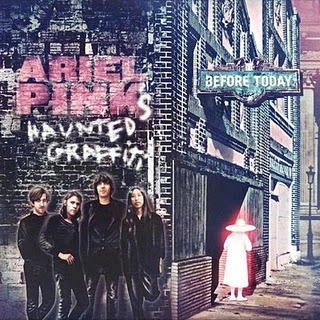
Runner Up:  Ariel Pink, Before Today

Sickest Bass Playing on a Non Rock Album: Cosmogramma

The Steven Ellison Genius Grant for Releasing Not One but Two Mindblowing Next Level Releases in One Year Because He’s Just Like That:
Flying Lotus
Ice Cold


Award for Good Album Intractably Marred by Questionable Vocal Affectations:  Baths, Cerulean
Post-Dilla Postal Service
Runner up: Salem, King Knight
Most Rewarding Questionable Vocal Affectation:  Sam Herring, Future Islands

Ryan Adams Award for Free Download That Is Somehow Still a Waste of Money and Space: Girl Talk, All Day
This Asshole...
Best Apotheosis of Self Via Disjointed Paranoid Confessional Ramblings From an Artist Emerging from Self-Imposed Exile After a Previous Full Length’s Lukewarm Critical Reception and Amidst Talk of Said Artist Becoming a Parody of Himself:  Destroyer, Archer on the Beach

A cosmonaut in a breadline, etc.
Runner Up: Kanye West, My Beautiful Dark Twisted Fantasy

Best Jump to Relative Hifi:  Beach House, Teen Dream
Deep blue pools of sexy melancholy

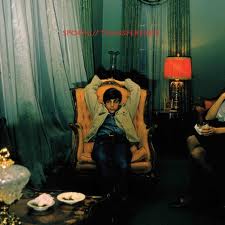
Worst Jump Back to Relative Lofi: Spoon, Transference
The less said the better
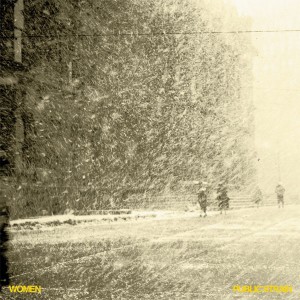
Best Production on a Lofi Release: Tie, Women, Public Strain and Ariel Pink, Before Today

The Wayne Coyne “If I was going to do shrooms, I’d want to do it with this guy” Award:  Dustin Wong

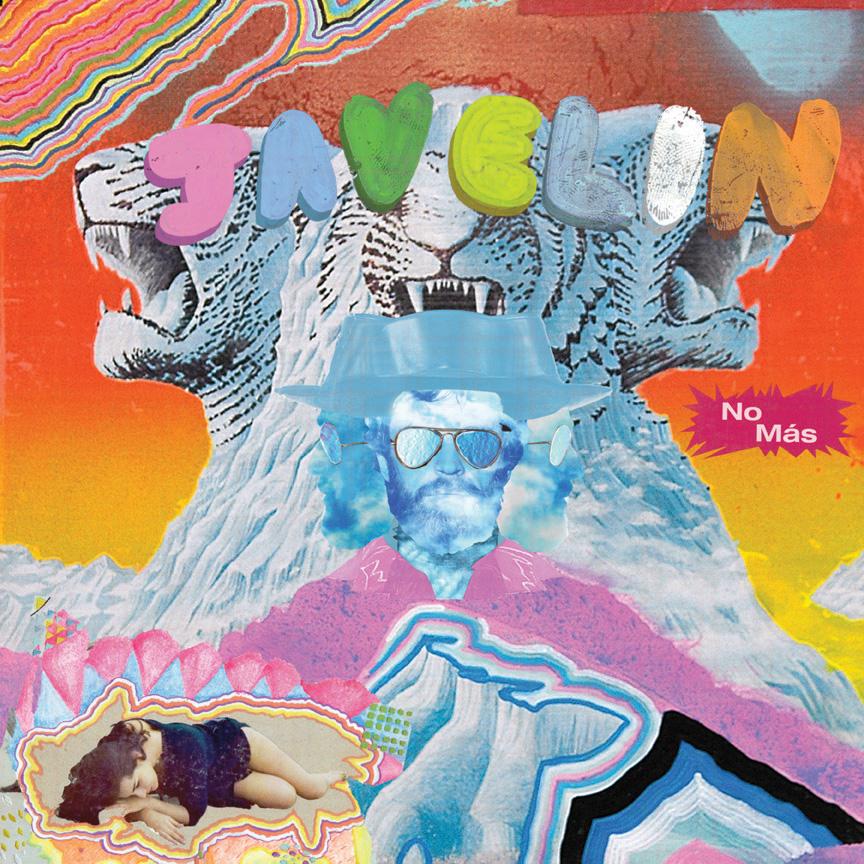
Best Chillwave Album Not Classified As or Affiliated With Chillwave:  Javelin, No Mas
Slept on

Stephen Malkmus Award for Best Song Imbued With a Humble Tossed-Off Perfection That’s Almost Infuriating Because You’re Pretty Sure It Was Written on the Spot:  Kurt Vile, I Got Religion

Best Moment to Be Justin Vernon, Or It Would Be if This Was All Recorded at Once: Monster
Nobody knew I was a muthafuckn monstah, nobody but Ye

Thursday, November 18, 2010

Late Fall Mix

This cold weather and early evenings have gotten the best of me and I fear that cabin fever setting in way too soon.  Here's a technicolor mix for these grayscale days.  Sorry for the sloppy mixing.


Hypocrite Listener Fall Mix by nigelharsch

Sunday, November 14, 2010

Women (Again)


I haven't been able to write anything better than this on Public Strain: 

"Post-indie rock indie rock is copies of copies of collages of copies; in the hands of Women, however, it’s not that cut ‘n dry. They work the degradation of the process, blow-up the resulting scuzz to canvas their gallery walls, splay melodies into abstractions into new melodies as they zoom in more and more. These aren’t Brooklyn hipsters dancing, it’s their dancing pixels. The subversion of staid indie rock becomes the subversion of a hundred different things, a hundred different roles, and Public Strain envelops all that, highlights all the contrasts and contradictions that are built into indie rock’s origins but have been lost over time through the genre’s maturation into a broad and often dull establishment, into Death Cab and shirt dresses and well-made music calledThe Suburbs. With gumption Public Strain breaks through the static of a moving yet flat image in order to bare the quaking microcosmos beneath. Its tracklist is a unified yet eclectic collection; “Bells” is dark ambient and “China Steps” is motorik with Sonic Youth guitars and “Venice Lockjaw” is aching balladry and “Eyesore” is perfection fucking chaos on top the whole indie canon and much of the rest is, at once, Nuggets (1972) and not Nuggets. Women have no use for indie rock as a market, a lifestyle, or even as a genre—it is merely the substance they break apart and unfurl into a letting of noise, of unseemly chords, of momentary transcendence, of their own identity." more

Tuesday, November 9, 2010

Bejar on Bejar

The impossible weight of his mythos is imploding on top of him.  I am so fucking excited.
loscil


Tuesday, October 12, 2010

Late thoughts on The Suburbs


AF's new Jonathan Franzen Novel

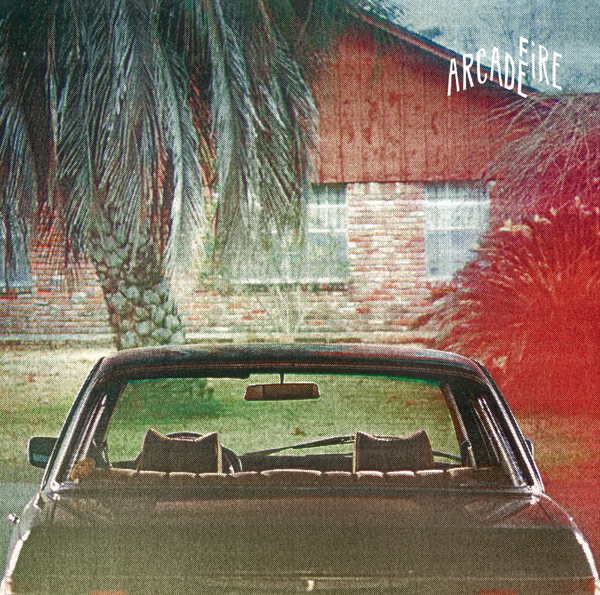
My pal Win Butler.  I’ll hand it to him, he likes to raise the stakes on himself.  He bemoans our fragmented modern condition in big, bold rock-star gestures so convincingly that it almost serves as a perfunctory answer to the perennial boomer question “what happened to music that meant something?”  And he’s mostly successful at it.  Whereas Neon Bible had some cringe worthy over the top pontifications, The Suburbs is just balanced enough not be an embarrassment, and it certainly had every possibility to be.  This is a capital A Album, it is about us, the kids, the suburbs, downtown.  This is about getting old and shedding off the optimism of youth in a terrifying world.  This is an album about punching the clock by one of the few indie bands that doesn’t have to.
The songwriting is much more mature and nuanced, but like on Neon Bible, Win is still always onstage.  Even his more intimate offerings are still backed up by mile long reverb trails and a full string section.  And he’s never really talking to anyone specific, he’s witnessing to the masses, shouting to the mountaintops, standing self aware in a specific moment of history.  I don’t think the Arcade Fire are ever gonna get away from that, that is what they do after all.  It’s just that Funeral sounded like a shout to the sky, The Suburbs sounds like a polemic.
According to their website, “each of the 16 tracks is mastered to a 12 inch lacquer and then transferred back to digital format so that the CD and digital version of the record sound just like the vinyl.”  Like I said, it’s an “Album” motherfuckers, one that has all the hallmarks of an album of the year if not an album for a generation (or at least a sequel to one depending how you feel).  But those hallmarks may be exactly what hinders it from being either.  At 16 tracks, you’re not really left wanting more.  As bleak as Win’s outlook gets, his lack of brevity steals all the punch of his warnings.  What’s put forth as a grand statement ends up being 16 variations on a single theme, sequenced as if they add up to a coherent narrative.  It doesn’t really come together.  The trick would be to cut redundant exercises like “Month of May” or “City With No Children,” because they really just kill time and add heft to what could be a surprisingly elegant and restrained album with a little editing.

Friday, October 8, 2010

Counterpoint- Women- Public Strain


Nigel's totally right about this. Plus, if you don't have the Bonus 7 inch, I will personally bring it over and we'll listen to it. Because it's pretty fun too.

Thursday, September 30, 2010

Women: Public Strain

Like they knew this would dominate my winter
Public Strain is brilliant.  Really really brilliant.  Don't believe me?

Buy it.  But a turntable and buy it again.  Tell everyone you know about it.  Send nasty hate mail to Pitchfork for not BNM'ing that shit to 10.

Monday, September 13, 2010

Hot New Trax from Steve Reich

Not too long a ago I got really into Steve Reich.  I listened to all ten discs of the NPU library's copy of Works while working in the basement in the media department.  I have the Deutsche Gramophone 3LP set of Drumming, I briefly had a portrait of the man as my profile pic, etc.  He was, for a short time in my life, the grand master of all things sonic, a position previously held by The Velvet Underground, Sonic Youth, Brian Eno, and more recently, J Dilla.
Reich's got a new piece out "Double Sextet/2x5" and it's streaming right here.  
Check out the 2x5 tracks, especially the first one.  It's absolutely amazing, which is no particular surprise considering the man is a bona fide genius.  Nor is the "rock instrumentation" surprising, Reich has done this before.  The biggest surprise was the sound of mix, especially the drums.  Those dry, tight drums that cut left and right, the decay of each note seeming to die down unnaturally, almost like they're sampled and triggered.  This doesn't sound like rock instrumentation, it sounds like experimental hip hop.  What's incredible about this is that the Steve Reich is one of the pioneers of sample based music, his innovations are part of the DNA of so much of the music we listen to.  Madlib even gave him a nod.  2x5 sounds like Reich remixed, like Reich chopped and screwed, like a much younger artist.  Good to hear.

Tuesday, August 31, 2010

Self Truth on the Play Count


Ben's Favorite Beatles Songs Based on iPod Play Count

1. Here Comes the Sun (George)
2. Across the Universe (John)
3. Carry That Weight (Paul)
4. Sun King (John?)
5. Why Don't We Do it in the Road (Paul)

Why: My iPod is full and I was trying to decide what I could live without so I could get this Serge Gainsbourg psychedelic anthology on there. But also, I never know what my favorite anything is. Here's a way of finding my favorites over 3 or 4 years or however long I've had this iPod.
Method: Organizing songs based off play count, and typing in various artists, or just scrolling and seeing which albums are all up in 20s, which artists I don't think of myself as liking that much but go to pretty frequently (I guess I like Simon and Garfunkel), which are only on there for sentimental but not listening reasons (Radiohead, especially Hail to the Thief to the present.), etc.
Critique of Method: Obviously a million different factors play into what songs you play on your iPod (I own the White Album on vinyl, but not Abbey Road or Let it Be, making my affection for Why Don't We.. all the more puzzling and suspicious), but it's an interesting test of which songs you're drawn to, even unconsciously, as you listen to music around town. My affection for Paul, while often difficult to defend, comes through pretty earnestly in a scan of the top 10. The highest Ringo song is "Don't Pass Me By" at 16th most played.

Tuesday, July 20, 2010

Pavement - Things Get Old

  I love Pavement, I grew up with their records, I idolized them. My friend once said it best, “What I like about Pavement is that they seem to know me better than I know myself.” As silly as that seems given SM’s obtuse lyrics, that ambiguous Pavement energy, a mixture of cocksmanship, pranksterism, nostalgia, and even a bit of darkness, seemed to resonate with my youth more than most of the bands out at the time. Whereas the Strokes and the White Stripes served straight up retro revival for us too young to remember their forebearers, Pavement was smarter, more nuanced. I felt like they were actually like us, full of anarchic energy as well as a smart-ass knowing. They were too cool to be cool, too smart to be hip, but in the margins they could be incredibly affecting.
  I first heard heard Slanted and Enchanted around 2001, only months after they’d broken up. They were my first introduction to the concept of indie rock and remain my ideal of the form, so much so that I internalized their failures as successes. I even had the notion that me and my smart-ass rock friends could make it just by being our smart ass selves, even while living in the middle of nowhere Indiana, hanging on the idea that someone out there (possibly Thurston Moore) would inexplicably find us and launch us into semi-stardom. A decade of fandom later I’ve become older and wiser. I’ve read Perfect Sound forever, watched the Slow Century, watched my contemporaries rise and fall, played in bands of my own and been thoroughly demystified of the glamour of independent music, or hell, the glamour of music in general. No love lost really, in fact in the place of my youthful idealism is a real love (I hope) for the music that sountracked my maturation and a more nuanced perspective on how bands and the music industry in general work. And after all these year, I still love SM, Spiral Stairs, Nast, Ibold, Westy and Young. But at the ripe old age of 24, and even though I never saw them the first time around, I am getting my first dose of reunion tour blues.
  Malkmus has been openly ambivalent about this reunion. First there was the GQ piece with Chuck Klosterman who, like Malkmus, cares more about sports than music these days and is about just as uninterested in Pavement. Then there was a more exploitative piece in Mojo featuring the whole band, another non plussed SM, and some sad moments when Kannenberg lets on how much more the band means to him than Malkmus. Put together with Perfect Sound Foerever and you can pretty much get the picture: Malkmus is kinda a dick and kinda aware of that, the rest of the band are kinda not dicks but maybe kinda not as talented and no one in the band really wants to talk about it. So my expectations for this Pitchfork performance were kinda secretly not so high, despite my really wanting them to be.
  I only went to one day of the festival this year, for money reasons and due to my work schedule. So many of my old pitchfork pals didn’t go at all, having either moved away, moved on, or completely lost interest. Whereas in the past the fest had always seemed like a sort of like a homecoming or gathering of a disparate community, this year everyone looked unfamiliar. I tried to summon the spirit, but it was hot, the sound was often shitty, there was no 312, and everyone looked if not young than childish, as if some shift into real adulthood had occurred unnoticed in my life this past year and I was just now realizing it. I wasn’t hating on anyone, my worst criticism of the day was launched Washed Out, saying they were a little boring. Beach House put on a great set, Major Lazer made me dance, Big Boi sounded good while I waited for Pavement in the setting sun. I was having a reasonably good time. And then the sun went down and Pavement sauntered on.
  And the set was, well actually quite good. The sound was awful for half the songs (the lighter half), the guys were so completely unenthused to be there it hurt, there were about 5 false starts, and the crowd was exhausted as fuck and pretty sick of standing face to armpit in the hot sun waiting for them to play. And yet, somehow, it was worth it. When the band was on, they delivered. There were several moments were I thought they’d fall apart but they’d swing back into cohesion, making the high points matter so much more. They played the songs faithfully but changed them up enough to make them sound if not new, then at least like living songs. It wasn’t slike the Slint show, where they played note for note but with no energy or spontaneity. It was by all metrics a real Pavement show. Compared to the footage from their last show before their breakup, maybe even a really good Pavement show. And since this will probably be the only Pavement show I ever see, I’m glad for that much.
  Perhaps it was disappointing for some. To be honest, I didn’t walk away in a blissful haze, and I don’t think Pitchfork fest has ever had such an anticlimactic end: no encore, no announcement, everyone just slowly walked out a little puzzled. And maybe I am so prematurely old, so jaded, expectations so low and so willing to forgive that I couldn't actually be disappointed. But Silence Kit killed, and it killed in that sad longing way it did when I first heard it. And when Malkmus replaced “shitty-life” for city-life the second time, instead of feeling sapped or slighted I kinda felt on the same page with him. It was unexpected and cathartic, and it revealed something I love about Pavement that no one talks about that much, that they’re a kinda dark, depressing little act when you get down to it. So many of their best songs are colored with loneliness, misanthropy, loss, anger, bitterness. It’s by far not what this band is about, but it’s all there. There were definitely more uplifting highlights of the show: Conduit for Sale, Trigger Cut, Frontwards, Spiral Stairs’ songs actually sounding really good to me for the first time maybe ever. But for all their attempts and all their thank-yous and all their practice (really, they sounded pretty tight), they couldn’t put on a convincing face of gratitude, they couldn't fool any of us into thinking that they were at all as excited to be there as we were to see them. Whatever wasn’t working for them before is still not working. But they were themselves, they played well together, and there were enough moments where they looked like they might actually be really enjoying the music they were playing, if not the people they were playing it with.
  And I think it was all very fitting. The era that birthed Pavement is clearly over, Pavement as a living entity is clearly over. They sounded out of context, out of place, and out of style at the fest. They aren’t some returning heroes getting their long lost due from a generation that finally “get’s them.” Although, I would have loved for them to say “hey kids, you Pavement fans are alright, I’m glad you still exist” But they did their job and they tried hard for us, for the kids who weren’t there the first time around, or maybe it was for our money. Who cares? I got to see Pavement, the real deal, in all their hapless glory. They gave me an unrepeatable performance, they surprised me, and I still feel like those songs I’d heard a million times meant as much to me now as they did ten years ago.

Friday, May 28, 2010

An Album Like This:


    I was initially confused and borderline disappointed with Cosmogramma when I first put it on.  After pouring into his back catalog and remixes I came to expect a certain feeling from Flylo tracks, something dark and simmering with a sinister sense of humor, music made by the dude grinning ear to ear in his promo shots ala Richard D James or the Joker.  His earlier more hip hop inflected work lumbered along in a narco haze, an already textured and gritty sound that would end up going into hyperspeed and endless grooves on Los Angeles.  With Los Angeles, there are beats on top of beats fighting other beats through thick smoky static, like so many bass bombed cadillacs passing each other on L.A.'s smoggy highway night.
   On Cosmogramma, Flying Lotus is equally comfortable delivering what listeners have come to expect from him (sick beats, tactile textures, an ADD predilection for 8 bit blips and beeps) and blowing those expectations wide open.  You hear it right away on Clockcatcher, first unleashing an unholy manic onslaught of space invaders artillery that has you thinking "too much too soon" right before it spins out in all directions leaving behind a field of sonic debris.  Much of the album's first half has an equally disorienting soundscape.  Sounds and melodies collide and fracture only to coalesce moments later into a cohesive groove.  It's disorienting but more than worth it.  This is how you know an album is going to be a grower, when you get halfway in and you already want to back track to get a closer listen.  It delivers the goods, but in such idiosyncratic and surprising ways that you're not sure how to take it at first.  You let in unravel and open up and discover a new way of listening until your more or less hooked.  Like, I really wasn't down with all the bit crunched bass solos at first, now I can't imagine the songs with out them.
    Although this wasn't the album I was expecting, it's actually the kind of album I've been waiting for all year.  Don't get me wrong, Teen Dream still makes my heart do swan dives into a sea of dark blue melancholy, but there's only so much of that I can take in my life.  Teen Dream is something to be careful with, to dole out with care or save for a rainy day.  Cosmogramma is an album to get lost in, to dwell upon and discover as well as (at times) something to play at a BBQ or a midsummer's dance party.  It's daring and inventive as well as warm and inviting, much like the man himself was when I saw him rocking a packed Double Door crowd, the wizard himself tearing it apart and grinning for days in sheer enthusiasm.